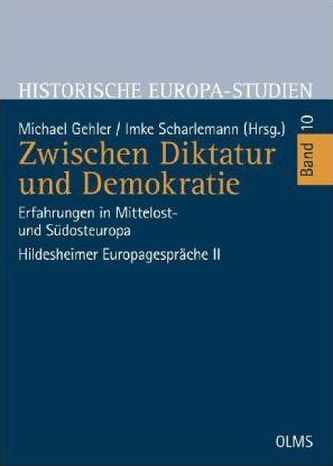
The implementation of democracy as a form of government was not historically inevitable in Europe but was a long and difficult process. In the course of the First World War new democratic and republican forms of states arose, but these were short-lived. Authoritarian, dictatorial and fascist...
prečítať celé
The implementation of democracy as a form of government was not historically inevitable in Europe but was a long and difficult process. In the course of the First World War new democratic and republican forms of states arose, but these were short-lived. Authoritarian, dictatorial and fascist regimes followed. The countries of central, eastern and south-eastern Europe came under new dictatorships after 1945. Only after the collapse of the iron curtain in 1989 did these come to an end, opening new perspectives for democracy. How powerfully the shadow of fascist and communist dictatorships affected central, eastern and also southern and south-eastern Europe, and how this was dealt with, are illustrated by the very different experiences of the experts questioned in the Hildesheimer Europagespräche . Themes include Stalin, the Soviet Union and Poland, continuities and discontinuities as exemplified by reforms and revolutions in Czechoslovakia/the Czech Republic and Hungary, violent changes in Romania, the war in the Balkans and the related diplomatic and political memories, and Italy, Greece and Turkey.
Skryť popis





 Kontakt
 Účet
Účet





Recenzie